Flat and low-slope roofing that actually drains and stays sealed.

TPO, modified bitumen, and coated flat-roof systems for South Florida homes and businesses — sealed against ponding water and our summer downpours.

Flat & Low-Slope Roofing

Flat roofs fail differently — so we build them differently

Flat and low-slope roofs — over Florida rooms, additions, carports, and a lot of mid-century and commercial buildings — don’t shed water the way a steep roof does. Water sits, finds the smallest gap in a seam, and works in. That’s why the membrane and the seams are everything.

We install low-slope systems — TPO and modified bitumen — as a fully sealed surface, with the drainage and flashing detailed for standing water, not just for rain running off. And where a roof still has life in it, a silicone coating can seal and extend it for far less than a tear-off.

See silicone roof coatings →
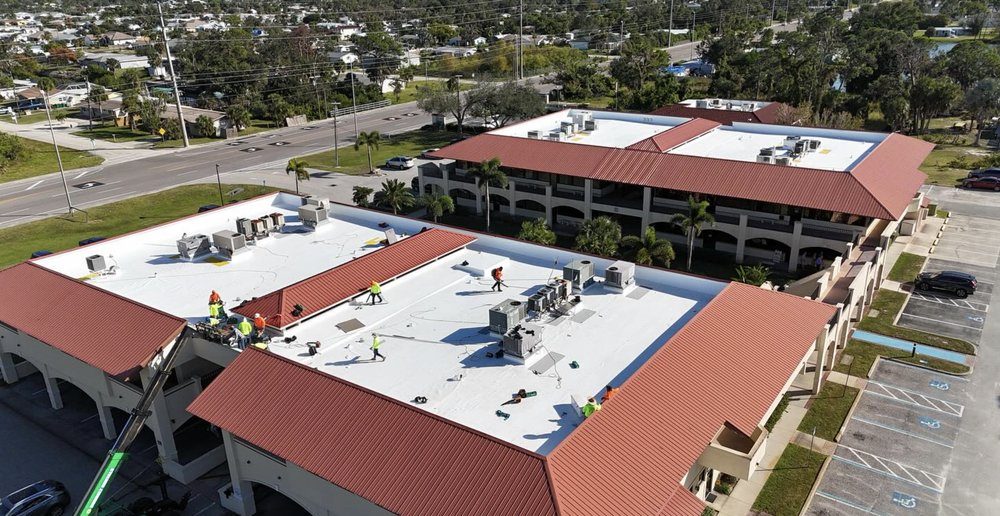
A sealed low-slope roof on a South Florida building by Hunter Construction

Why Choose Hunter

Sealed against standing water

A flat roof has to hold water that doesn’t drain right away. We install membranes and seams built to stay watertight even where water ponds after a storm.

Systems suited to the roof

TPO, modified bitumen, or a coating — the right low-slope system depends on the deck, the slope, and how the roof is used. We match the system to your roof instead of forcing one product.

Coat it or replace it — honestly

If your flat roof still has life in it, a silicone coating can seal it and add years for far less than replacement. If it’s past that, we’ll tell you. Either way you get the honest call.

Our Simple Process

Three steps from finding the water to a sealed low-slope roof.

1

Inspect & find the water

We check the membrane, seams, drains, and flashing, and find where water is getting in or sitting — the low spots and failed seams that cause flat-roof leaks.

2

Prep the surface

We clean the roof, make repairs, and detail the drains and edges so the new membrane or coating bonds and drains the way it should.

3

Install & seal

We install the low-slope system or coating as a fully sealed surface, with the seams and penetrations detailed to keep standing water out.

Flat roofing sealed to hold — and stood behind

The right low-slope system, detailed seams, and workmanship we put in writing. Ask about financing on flat-roof replacement and coatings.

Financing & Warranties →

What Homeowners Say

Real reviews from across Palm Beach County and beyond.

Hunter Construction replaced the roof on our home. It’s great to work with a small business that makes you feel at home — I’ve found my roofing contractor in Palm Beach County.

J
Jason M.
Roof Replacement

Very professional. Wouldn’t go with anyone else — they’ll treat you right.

B
Brandon Q.
Homeowner

I’ve sold roofs for numerous companies all over, and I’ll always recommend Hunter Construction for commercial and residential work.

K
Keith W.
Industry Professional
Got Questions?

Frequently
Asked
Questions

Still have questions? Call our team →

Why do flat roofs leak more than sloped roofs?
Because water doesn’t run off — it sits. Any weak seam, failed flashing, or low spot that ponds gives water time to work in. On a flat roof the membrane and the seams do all the work, so that’s where the quality has to be.
What flat roofing materials do you install?
Mainly TPO and modified bitumen for low-slope roofs, plus silicone coatings to restore roofs that still have life in them. We match the system to your roof’s slope, deck, and use.
Can my flat roof be coated instead of replaced?
Often, yes — if the roof is still structurally sound and not saturated, a silicone coating can seal it and add years for a fraction of a replacement. If it’s too far gone, we’ll tell you straight. See our silicone coating page for how it works.
What causes ponding water, and is it a problem?
Ponding is water that sits more than a day or two after rain, usually from low spots or poor drainage. Over time it stresses the membrane and finds seams. We address drainage as part of the job rather than ignoring it.
Do you do flat roofs on both homes and businesses?
Yes — Florida rooms, additions, and carports on homes, and low-slope commercial buildings. The systems overlap; the details change with the building.
How long does a flat roof last?
It depends on the system and the sun, but a properly installed low-slope membrane generally runs 15 to 25 years, and a silicone coating can add roughly 10 to 15 more when it’s applied before the roof fails.

Flat roof leaking or ponding?

Free flat-roof assessments across Palm Beach, Broward, Martin & St. Lucie.

Call (561) 468-5550