Fluid-applied waterproofing for balconies, decks, walkways, and concrete — cracks treated, every joint and corner reinforced, and water-tested before the tile or finish goes back down.
Waterproofing
In South Florida, a balcony or deck takes a beating — relentless sun, driving rain, and standing water all working to find a way through the slab. Once water gets into a crack, it travels into the structure: corroding rebar, rotting framing, and staining the ceilings below.
We waterproof the surface with a fluid-applied membrane that bonds directly to the concrete and cures into one continuous, seamless barrier — no seams or laps for water to sneak past. Every crack gets treated, every wall edge and corner gets reinforced, and the surface is water-tested before any tile or wear coat goes back down.
Warning signs
Water coming through a balcony shows up in the room or soffit underneath.
Efflorescence and rust on the underside mean water is moving through the concrete.
Tile that cracks, sounds hollow, or lifts is often sitting on wet, failing layers.
Ponding means poor slope or drainage that keeps the surface wet.
Rust where railings enter the slab is a sign water is getting in there.
Many older balconies were never waterproofed — they’re on borrowed time.
What we waterproof
Fluid-applied membranes under tile or as a finished coating, with reinforced edges and drains.
Second-floor decks, breezeways, and walkways that sit over living space.
Slab edges, framing, and ceilings below repaired as a licensed general contractor.
What to expect
We find where water is getting in and check slope, cracks, and damage underneath.
We profile the surface, fill the cracks, prime, and reinforce corners, drains, and edges.
We apply the membrane in full coats, water-test it, then reinstall tile or a wear coat.
Why Hunter
Once tile goes down, you can’t see the membrane again. That’s why we test it first — and why the details at every corner and drain matter so much.
The crew that waterproofs your balcony can rebuild whatever has to come up.
Professional membranes built for foot traffic, ponding water, and Florida sun.
We water-test the membrane before any finish goes down, so we know it holds.
On the job
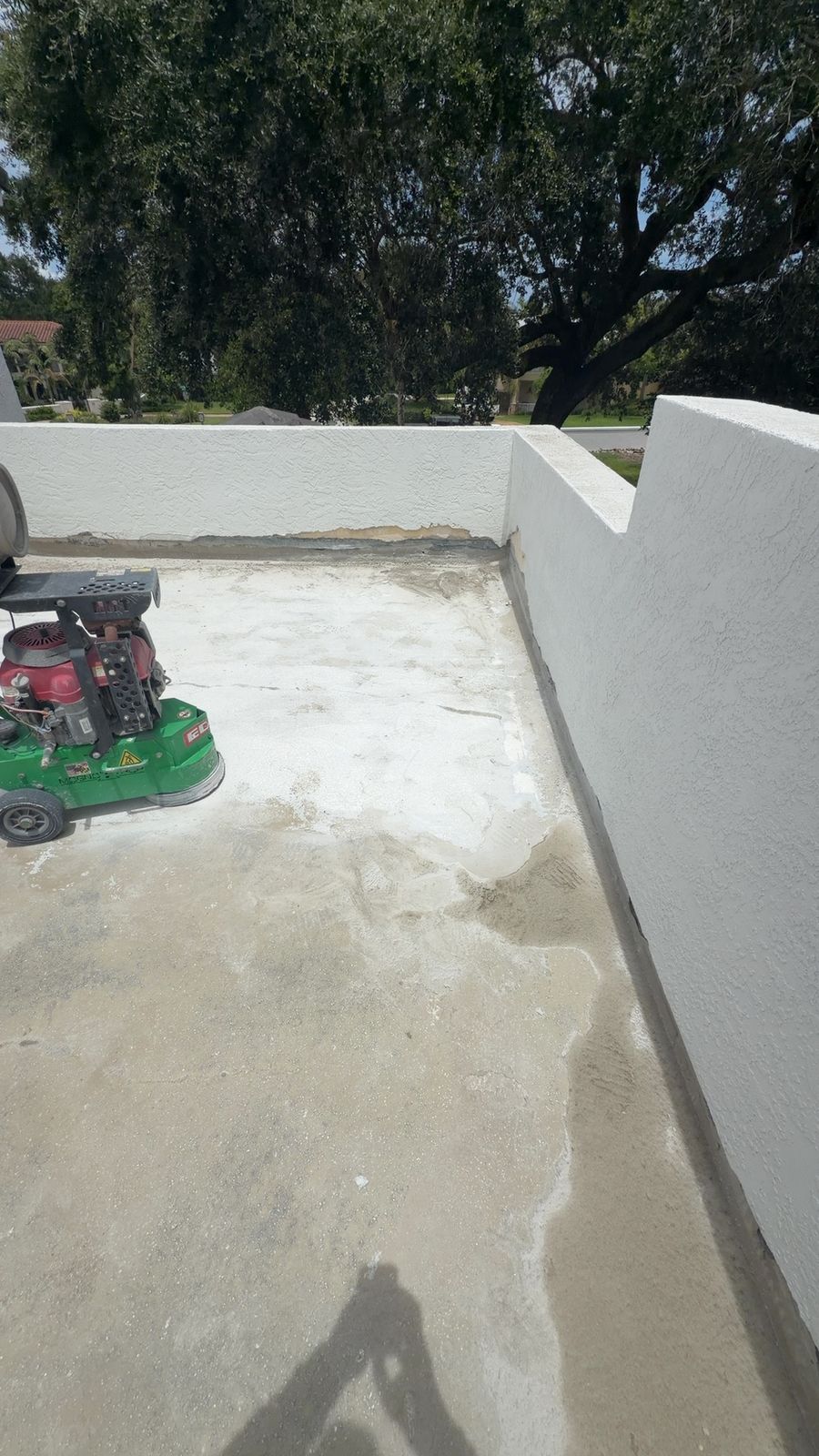
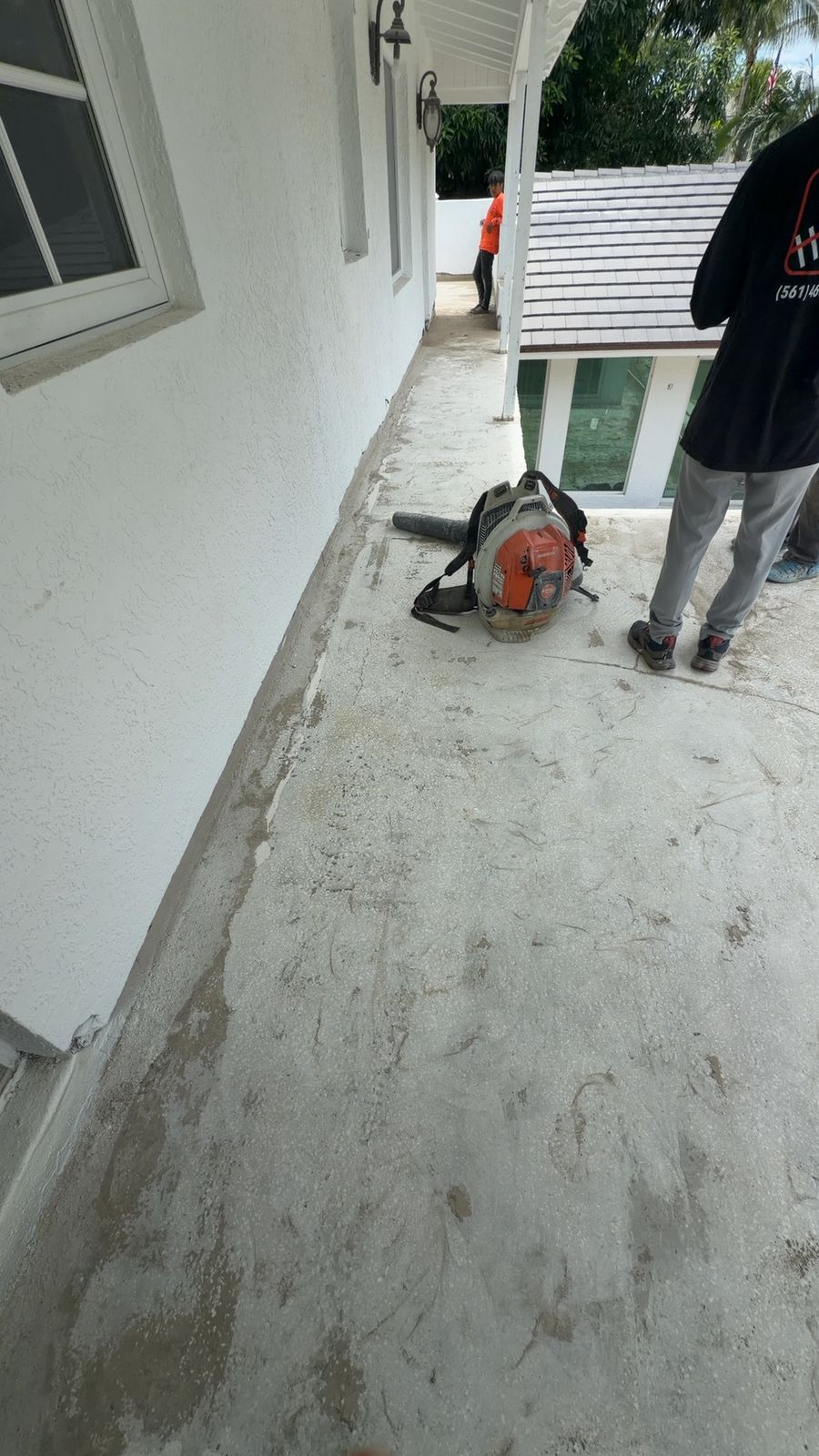
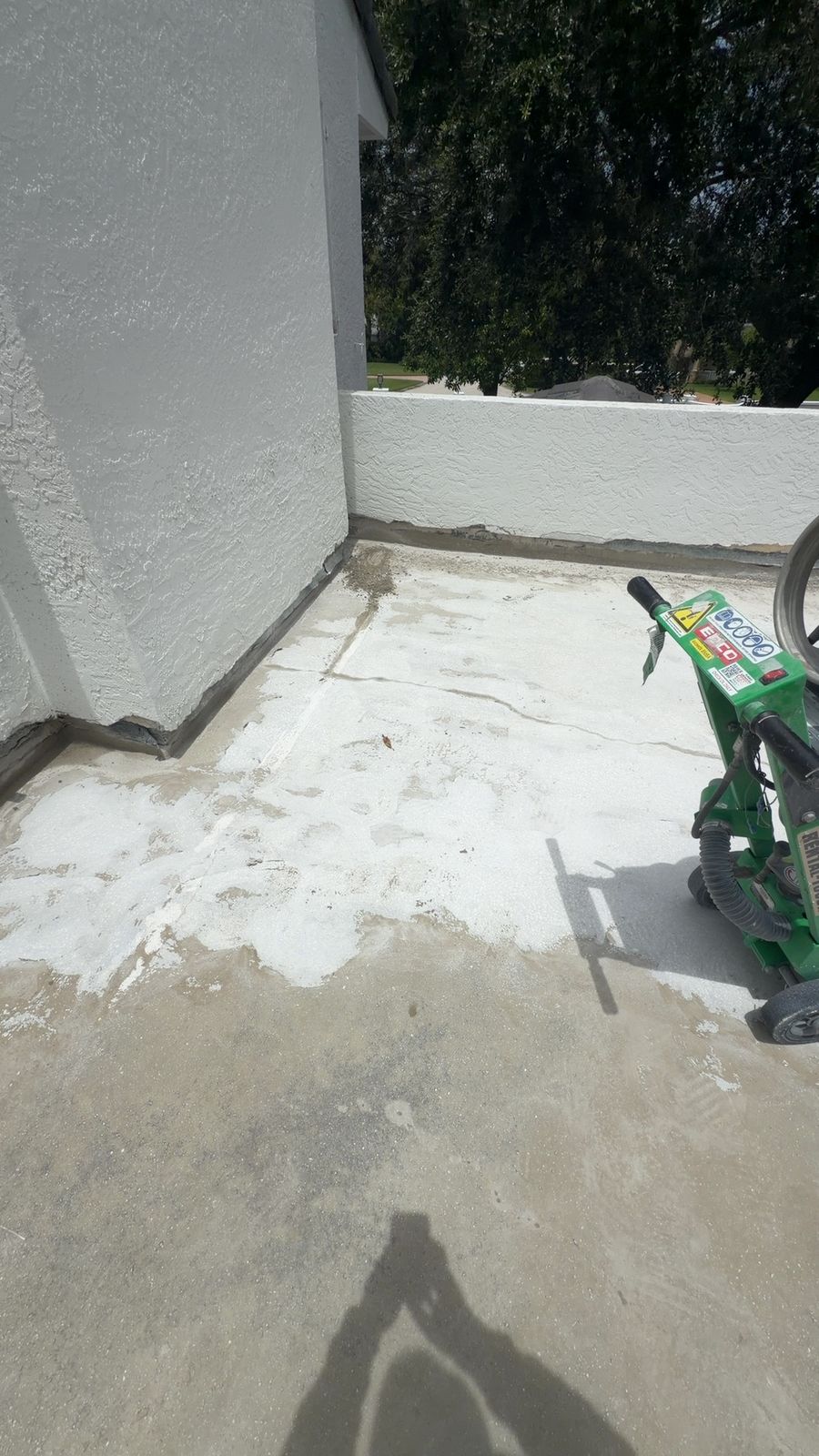
Before any membrane goes down, the deck gets ground back to sound concrete and every wall edge and corner gets cleaned up — that’s what makes the waterproofing bond and hold.
What homeowners say
Hunter Construction replaced the roof on our home. It’s great to work with a small business that makes you feel at home — I’ve found my roofing contractor in Palm Beach County.
Very professional. Wouldn’t go with anyone else — they’ll treat you right.
I’ve sold roofs for numerous companies all over, and I’ll always recommend Hunter Construction for commercial and residential work.
Good questions
Still wondering about something? Call us at (561) 468-5550 — real answers, no sales pitch.
Balconies, decks, patios, walkways and breezeways, second-floor and rooftop decks, pool decks, planters, and concrete surfaces in general. If water is getting through a slab — or you’re putting tile over one — it should be waterproofed first.
It’s a liquid waterproofing coating rolled or sprayed onto the concrete that cures into a single continuous, rubber-like layer bonded to the slab. With no seams or overlaps, there’s nowhere for water to work its way underneath.
Usually, yes. The membrane has to bond to the structural slab, so existing tile and the old setting bed generally come up first. We confirm what’s needed when we inspect, and reinstall tile or a wear coat once the membrane is down and tested.
Common signs are stains or drips on the ceiling below, white chalky residue or rust streaks on the underside, cracked or loose tile, and water that sits and won’t drain.
Yes. Because we’re a licensed general contractor, if water has already damaged the slab edge, framing, or the ceiling below, we handle that build-back as part of the project.
Before any finish goes down, we water-test the membrane to confirm it holds — not hope it does once it’s buried under tile.
Yes. Pool decks, planters, and other concrete surfaces that hold or shed water can all be waterproofed with the right system.
Yes. We work with associations and property managers on multi-unit balcony and walkway projects.
Related services
Where we work
Based in Jupiter and working throughout the Treasure Coast and the Palm Beaches. If your home or building is in one of these areas, we can get out to take a look.
Free assessments for balconies, decks, and concrete across Palm Beach, Broward, Martin & St. Lucie.