Concrete and clay tile replacement and repair, installed over a waterproof underlayment that does the real work of keeping your home dry. Done right the first time, by a licensed local crew.
Tile Roofing
Tile is the look most South Florida homes were built for — barrel, S-tile, and flat profiles in concrete or clay, across every established neighborhood from Jupiter to Boca. Done right, it lasts 40 to 50 years and handles sun and heat better than almost anything else.
Here’s the part most people never hear: the tile isn’t what waterproofs your home — the underlayment beneath it is. Tile shields that membrane from sun, impact, and wind. So a tile roof lives or dies on the underlayment, the flashing at every wall and valley, and how each tile is fastened for wind. That’s exactly where we spend our attention.
It’s also why a “tile problem” is often an underlayment problem in disguise. When the tile still looks fine but you’re getting leaks, the membrane underneath has usually reached the end of its life — and we’ll show you that rather than guess.
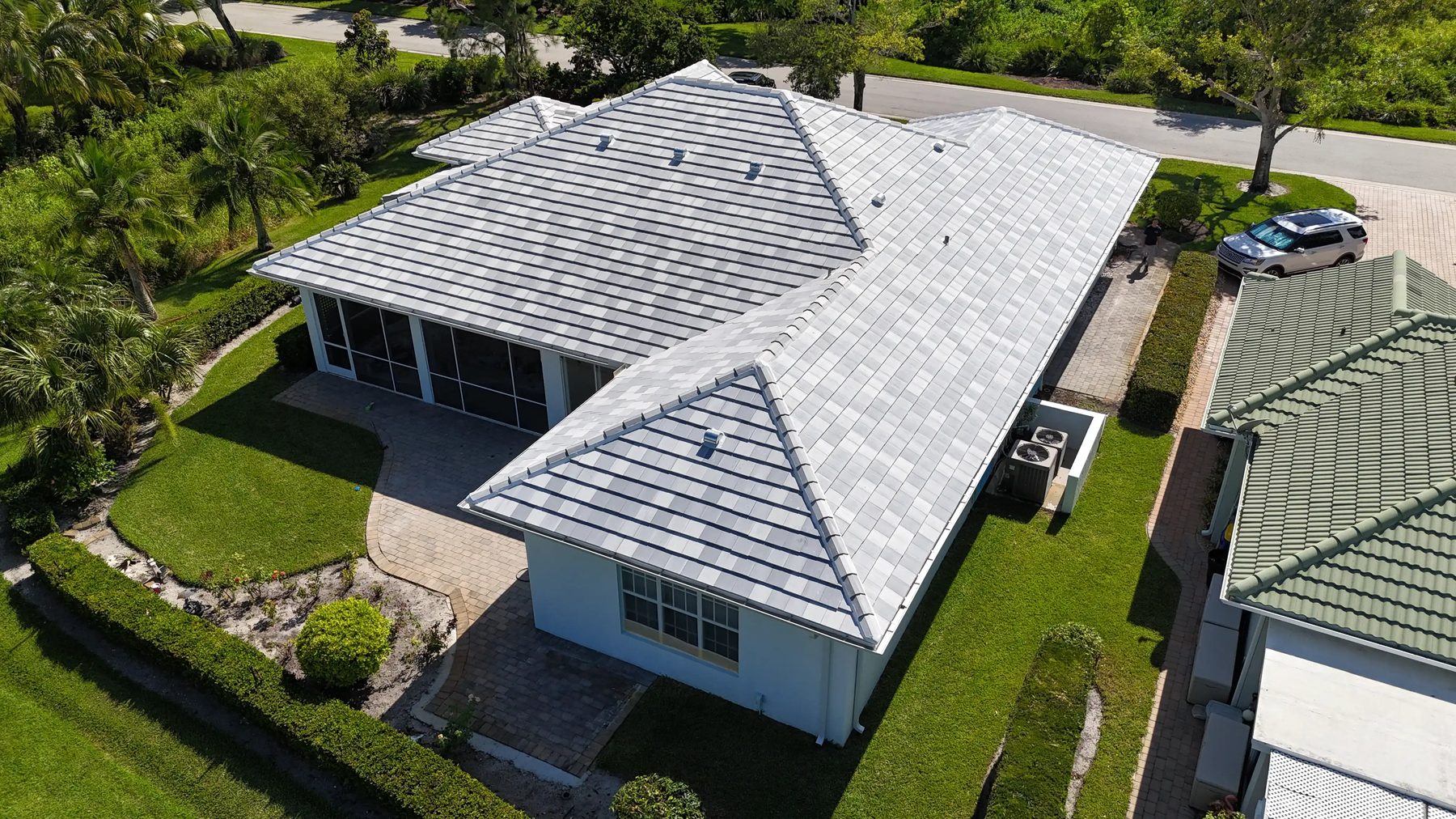
Repair or replace?
Tile itself is tough. Most tile roofs fail from what’s underneath it, so the warning signs aren’t always on the surface.
The tile looks fine, but water’s getting in. That’s the classic sign of underlayment that’s worn out beneath the tile.
Foot traffic, falling limbs, and storms crack and shift tiles. A few is a repair; many across the roof is a bigger conversation.
Tiles can outlast their underlayment. If your roof is in that age range and leaking, the membrane is the likely culprit.
Ridges and hips take the most wind. Loose or cracked caps let water and wind under the roof.
Water stains, damp insulation, or dark spots on the decking point to water already getting past the tile.
Leaves and debris trap water in valleys and against the tile, speeding up wear on the underlayment underneath.
What we do
From a handful of cracked tiles to a full tear-off, we handle tile at every stage of its life.
Full tear-off to the deck, new underlayment and flashing, and new concrete or clay tile installed to wind spec.
On some roofs the tile is still good. We carefully lift it, replace the underlayment, and re-lay the existing tile.
Cracked and slipped tiles replaced, ridges and hips reset, and leaks traced back to their source — not just patched.
| Concrete tile | Clay tile | |
|---|---|---|
| Lifespan | 40–50 years | 50+ years |
| Weight | Heavier | Lighter than concrete |
| Color | Can fade over time | Holds color longer |
| Upfront cost | More budget-friendly | Higher |
| Profiles | Many options | Classic barrel & S-tile |
Both perform well here. The right pick depends on your look, budget, and the structure. Either way, the underlayment beneath is what keeps water out.
What to expect
We check the tile, underlayment, deck, and structure, then give you a clear written quote — repair, re-lay, or replace.
We pull the permit and order your tile profile and color, then schedule around the weather.
We strip to the deck, replace soft wood, and install the underlayment and flashing that do the waterproofing.
We set and fasten the tile to spec, finish hips and ridges, pass inspection, and clean up.
Why Hunter
Any crew can make a tile roof look good from the street. We focus on the underlayment, flashing, and fastening that decide whether it still keeps water out in 20 years.
We treat the membrane as the real roof — quality material, fully detailed at every valley, wall, and penetration.
Tile is attached to the manufacturer’s spec for our wind zone, with hips and ridges set to hold.
If your tile can be re-used, we’ll tell you. You don’t pay for new tile you don’t need.
Recent work


What homeowners say
Hunter Construction replaced the roof on our home. It’s great to work with a small business that makes you feel at home — I’ve found my roofing contractor in Palm Beach County.
Very professional. Wouldn’t go with anyone else — they’ll treat you right.
I’ve sold roofs for numerous companies all over, and I’ll always recommend Hunter Construction for commercial and residential work.
Good questions
Still wondering about something? Call us at (561) 468-5550 — real answers, no sales pitch.
A properly installed concrete or clay tile roof commonly lasts 40 to 50 years. The tiles often last even longer; it’s usually the underlayment beneath them that ages first, which is why a good underlayment matters so much.
Often, yes. Cracked or slipped tiles can be swapped individually without redoing the roof. If the underlayment beneath is still sound, that’s a repair — we’ll tell you honestly which situation you’re in after we look.
Both last for decades. Clay holds its color longer and has the traditional look; concrete is heavier, more budget-friendly, and comes in more profiles. We’ll walk through both for your home and budget.
Because the underlayment beneath the tile does the waterproofing, and it can wear out long before the tile does. When it fails, water gets in even though the tile looks perfect. We confirm it before recommending anything.
Sometimes the tile is fine and only the underlayment has worn out. On some roofs we can lift and re-lay the existing tile over new underlayment; on others it’s more practical to replace. We assess and give you the straight answer.
We do our best to match profile and color for repairs, but some tiles are discontinued or have faded over the years, so an exact match isn’t always possible. We’ll show you the closest options before we start.
Tile is heavier than shingle, so the structure has to be built or rated for it. Most South Florida homes that already have tile are. If you’re switching from shingle to tile, we confirm the structure first.
It can. The air gap under the tiles and the reflectivity of lighter tile colors help keep the attic cooler than a dark shingle roof, which can take some load off your AC in our summers.
Tile can crack under foot if you don’t know where to step, which is one reason we don’t recommend climbing up yourself. Our crew knows how to move across tile without damaging it.
Related services
Where we work
Based in Jupiter and working throughout the Treasure Coast and the Palm Beaches. If your home or building is in one of these areas, we can get out to take a look.
Book a free inspection. We’ll check the tile and the underlayment beneath it and tell you honestly whether it’s a repair, a re-lay, or a replacement.